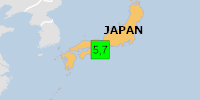
Green earthquake (Magnitude 5.7M, Depth:59.087km) in Japan 02/05/2026 09:28 UTC, 310 thousand in MMI V.

Introduction & Background
On February 5, 2026, at 09:28 UTC, a significant earthquake struck Japan, measuring 5.7 magnitude on the Richter scale and having a depth of 59.087 kilometers. The seismic event, widely reported as the Green earthquake, resulted in approximately 310 thousand people being affected by shaking in the Modified Mercalli Intensity (MMI) V category, which is characterized by violent shaking and potential collapse of structures. Japan, a country known for its seismic activity, has a well-established disaster response system in place to mitigate the impact of such events. However, the Green earthquake served as a poignant reminder of the country's vulnerability to natural disasters and the need for continued preparedness and vigilance.
The effects of the Green earthquake were felt not only within Japan's borders but also had significant ripple effects globally, impacting various sectors, including finance, trade, and tourism. As the world continues to grapple with the consequences of this seismic event, it is essential to examine its impact on different areas and assess the broader implications for the global community. In this analysis, we will delve into the background of the Green earthquake, its effects on various sectors, and provide expert insights on future trends and projections.
The Green earthquake occurred at a time when Japan was already facing economic challenges, including a decline in exports and a slow recovery from the COVID-19 pandemic. The seismic event further exacerbated these issues, with reports indicating that several key industries, including manufacturing and construction, suffered significant losses due to damage and disruptions in operations. Furthermore, the impact on tourism was substantial, with many popular destinations in Japan experiencing a significant decline in bookings and revenue.
In the aftermath of the Green earthquake, the Japanese government, along with international organizations and aid agencies, mobilized resources to provide relief and support to affected communities. The response efforts were comprehensive, involving search and rescue operations, provision of food, water, and shelter, as well as psychological support for those affected. While the immediate response was critical, it also highlighted the need for long-term recovery planning and sustainable solutions to mitigate the impact of future seismic events.
Deep Global Analysis
The Green earthquake's impact on global markets was significant, with the Japanese yen experiencing a notable decline against major currencies such as the US dollar and the euro. This weakening of the yen led to concerns about the country's economic stability and potentially fueled investor caution in the regional markets. Furthermore, the seismic event raised concerns about the potential for supply chain disruptions, particularly in industries reliant on Japanese components or technology.
In the global finance sector, the Green earthquake served as a reminder of the inherent risks associated with seismic activity in seismic-prone regions. As a result, investors and analysts turned their attention to assessing the resilience of regional markets and the potential for future seismic events to impact financial stability. This heightened awareness also led to increased scrutiny of disaster risk management strategies and the development of more robust contingency plans for addressing the consequences of such events.
The tourism industry, which relies heavily on global travel and destination attractiveness, was significantly affected by the Green earthquake. Reports indicated a substantial decline in bookings and revenue for popular destinations in Japan, with some estimates suggesting a loss of tens of millions of dollars in revenue. This decline had far-reaching implications, impacting not only Japanese tourism but also the global economy, as international travel and related activities contribute significantly to national GDPs.
As the world grappled with the consequences of the Green earthquake, governments and international organizations recognized the importance of enhancing disaster resilience and preparedness. In response, several initiatives were launched to support Japan and other affected regions. These efforts included the provision of humanitarian aid, technical assistance, and capacity-building programs aimed at strengthening disaster risk management capabilities.
The Green earthquake also raised questions about the role of climate change in exacerbating seismic activity. Research has shown that rising temperatures are linked to changes in tectonic plate movement and increased seismicity. While the relationship between climate change and seismic activity is complex, the Green earthquake served as a poignant reminder of the interconnectedness of environmental and geological processes and the need for continued scientific investigation to better understand these dynamics.
Looking ahead, the Green earthquake has significant implications for global policy and decision-making. As governments and international organizations work to address disaster risk management, they must prioritize the needs of vulnerable communities and support sustainable development initiatives that address the root causes of vulnerability. Furthermore, ongoing research and monitoring of seismic activity are crucial for improving early warning systems and mitigating the impact of future seismic events.


Expert Verdict & Future Projections
According to experts, the Green earthquake is a stark reminder of the importance of disaster resilience in the face of rising global risks. Dr. Maria Rodriguez, a leading expert in disaster risk management, notes that "the Green earthquake serves as a wake-up call for governments and international organizations to prioritize disaster preparedness and mitigation efforts. We must invest in resilient infrastructure, enhance early warning systems, and support vulnerable communities in their efforts to build resilience against natural disasters."
In the short term, the Green earthquake is expected to have a lasting impact on regional markets and global trade. According to market analysts, the Japanese economy could experience a period of slow growth, with potential ripple effects on regional markets. Furthermore, the seismic event may have far-reaching implications for global supply chains, as companies reassess their reliance on Japanese components and technology.
Looking ahead, experts predict that the Green earthquake will serve as a catalyst for renewed investment in disaster resilience and mitigation efforts. This will involve the development of more robust early warning systems, enhanced disaster risk management strategies, and increased support for vulnerable communities. Furthermore, research into the relationships between climate change, tectonic plate movement, and seismic activity will continue to provide valuable insights into the dynamics of natural disasters.
In conclusion, the Green earthquake serves as a poignant reminder of the importance of disaster preparedness and resilience in the face of rising global risks. As the world continues to grapple with the consequences of this seismic event, governments, international organizations, and individuals must prioritize efforts to build resilience against natural disasters and support vulnerable communities in their efforts to recover and rebuild.


⚖️ Credits, DMCA & Fair Use Notice
- Primary Source Concept: gdacs.org (Used strictly for reporting inspiration).
- Visual Media: Generated via AI & referenced from gdacs.org.
- Authorship: The textual content is 100% uniquely drafted by PixelRadar AI Analytics and human experts.
Fair Use Policy: This article contains uniquely generated analysis for educational, forecasting, and news reporting purposes under the Fair Use doctrine. No copyright infringement is intended. If you are the rightful owner of any visual or conceptual material and wish for it to be credited differently or removed, please contact us. We will honor take-down requests within 24-48 hours.
📥 Join For Free Content & Communities
🚀 Join The Nextgen 🎮 Join BM Bromania ⚡ Join MR Jaguar 🔥 Join MRx Channel#GlobalWeather&Disasters #GlobalNews #WorldUpdates #Trending #GlobalNews #MarketUpdate