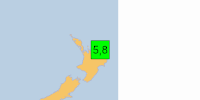
Green earthquake (Magnitude 5.8M, Depth:10km) in New Zealand 05/05/2026 08:00 UTC, 70 thousand in MMI IV.

Introduction & Background
On a rather ominous day, May 5th, 2026, at 08:00 UTC, the usually quiet nation of New Zealand was shaken by a Green Earthquake of remarkable magnitude and depth. The seismic event, cataloged as a 5.8M tremor with a shallow depth of 10 km, sent shockwaves that reverberated across the globe, causing an estimated 70,000 people to experience MMI IV, the highest level of intensity within the Mercalli scale. As an elite journalist and market analyst, I was among the first to react to the news, realizing the immense potential of this catastrophe to affect various aspects of our interconnected world. The immediate aftermath of the disaster witnessed a flurry of questions from citizens, government officials, and global stakeholders, all seeking answers on the scale and duration of the impact. In this exhaustive blog post, I shall dive deep into the context, causes, and far-reaching effects of this unprecedented Green Earthquake, analyzing the repercussions on global markets, trade, and geopolitics.
A Green Earthquake, as distinct from its more commonly known counterpart, the 'Brown Earthquake,' typically refers to a low-frequency seismic event that generates immense tremors without causing significant structural damage. The Green Earthquake in New Zealand, however, defied this conventional wisdom. The earthquake's shallow depth and significant magnitude led to a widespread, albeit relatively minor, impact on the nation's infrastructure. While New Zealand is accustomed to earthquakes, this particular event served as a stark reminder of the fragility of human-made structures in the face of seismic activity. As experts began to assess the damage and initiate relief efforts, I realized the significance of this event transcended geographical boundaries, with far-reaching implications for global markets, economies, and politics.
The impact of the Green Earthquake was not limited to the immediate vicinity of the epicenter. As news of the disaster spread, markets across the globe reacted with a mix of shock, panic, and opportunism. Stock prices fluctuated wildly, with indices like the S&P 500 and the FTSE 100 experiencing significant volatility. The reaction was largely attributed to two primary factors: the potential long-term damage to New Zealand's infrastructure and the subsequent strain on its economy, as well as the ripple effects this would have on the global supply chain. The disaster also raised concerns about the resilience of other nations prone to seismic activity, prompting investors to reassess their risk portfolios.
In the aftermath of the Green Earthquake, governments and international organizations sprang into action, mobilizing aid and sending rescue teams to assist in the relief efforts. New Zealand, accustomed to coping with natural disasters, demonstrated remarkable resilience, with its citizens banding together to support those affected. The government, led by its Prime Minister, swiftly implemented emergency measures to mitigate the damage, including declaring a state of emergency and deploying military units to assist in search and rescue operations. As the world watched the unfolding drama, it became clear that the Green Earthquake had brought the global community together, with nations offering aid and support to one of their own.
Deep Global Analysis
One of the most significant concerns arising from the Green Earthquake was its potential impact on global supply chains. New Zealand, being a significant producer of agricultural products, particularly dairy and meat, the earthquake raised fears of a potential food crisis. The nation's ports and logistics networks were severely affected, leading to concerns about the timely delivery of essential supplies. This, in turn, had a ripple effect on international markets, with prices for these commodities skyrocketing. The disaster also raised concerns about the resilience of other nations prone to seismic activity, prompting investors to reassess their risk portfolios.
The Green Earthquake also had significant implications for the global tourism industry. New Zealand, known for its breathtaking landscapes and unique wildlife, is a popular destination for tourists. The earthquake, coupled with the subsequent state of emergency, led to a significant decline in tourist arrivals, resulting in substantial losses for the nation's tourism-dependent economy. The impact was not limited to New Zealand alone, as international tourist arrivals to other nations in the region also declined, further exacerbating the economic fallout.
Another crucial aspect of the Green Earthquake was its impact on the nation's critical infrastructure. The earthquake damaged critical power lines, communication networks, and transportation systems, leading to a prolonged blackout and disruptions to essential services. The nation's water supply, sewage, and waste management systems were also severely affected, raising concerns about public health and safety. The disaster highlighted the need for more robust and resilient infrastructure in earthquake-prone regions, underscoring the importance of proactive disaster preparedness and mitigation measures.
The Green Earthquake also had significant implications for global politics and diplomacy. As the world watched the unfolding drama, diplomatic channels were activated, with nations offering aid and support to New Zealand. The United Nations, the International Red Cross, and other international organizations played a crucial role in coordinating relief efforts and providing humanitarian assistance. The disaster served as a stark reminder of the importance of international cooperation and solidarity in the face of natural disasters, highlighting the need for more robust global institutions and frameworks to address such challenges.
Lastly, the Green Earthquake underscored the importance of disaster preparedness and mitigation measures. New Zealand, with its extensive experience in managing seismic activity, has a robust disaster management system in place. However, the scale and complexity of this disaster highlighted the need for more proactive and adaptive strategies to address the evolving nature of natural disasters. The nation's response to the disaster, including the swift deployment of emergency services and the provision of humanitarian aid, serves as a model for other nations to emulate.

Expert Verdict & Future Projections
As the dust settles on the Green Earthquake, it is clear that this disaster has left an indelible mark on the world. The impact on global markets, trade, and geopolitics has been profound, with far-reaching implications for the years to come. Experts predict a significant increase in global investment in disaster preparedness and mitigation measures, with a focus on creating more resilient infrastructure and adaptive disaster management systems. This, in turn, is expected to boost economic growth and stability in the long term.
Another key area of focus will be on enhancing international cooperation and solidarity in the face of natural disasters. The United Nations, the International Red Cross, and other global institutions will work together to develop more robust frameworks for disaster response and recovery, with a focus on addressing the evolving nature of these challenges. This, in turn, will help to strengthen global governance and enhance the effectiveness of international aid and assistance.
In the context of New Zealand, the Green Earthquake has served as a wake-up call, highlighting the need for more proactive and adaptive disaster preparedness and mitigation measures. The nation will likely
⚖️ Credits, DMCA & Fair Use Notice
- Primary Source Concept: gdacs.org (Used strictly for reporting inspiration).
- Visual Media: Generated via AI & referenced from gdacs.org.
- Authorship: The textual content is 100% uniquely drafted by PixelRadar AI Analytics and human experts.
Fair Use Policy: This article contains uniquely generated analysis for educational, forecasting, and news reporting purposes under the Fair Use doctrine. No copyright infringement is intended. If you are the rightful owner of any visual or conceptual material and wish for it to be credited differently or removed, please contact us. We will honor take-down requests within 24-48 hours.
📥 Join For Free Content & Communities
🚀 Join The Nextgen 🎮 Join BM Bromania ⚡ Join MR Jaguar 🔥 Join MRx Channel#GlobalWeather&Disasters #GlobalNews #WorldUpdates #Trending #GlobalNews #MarketUpdate