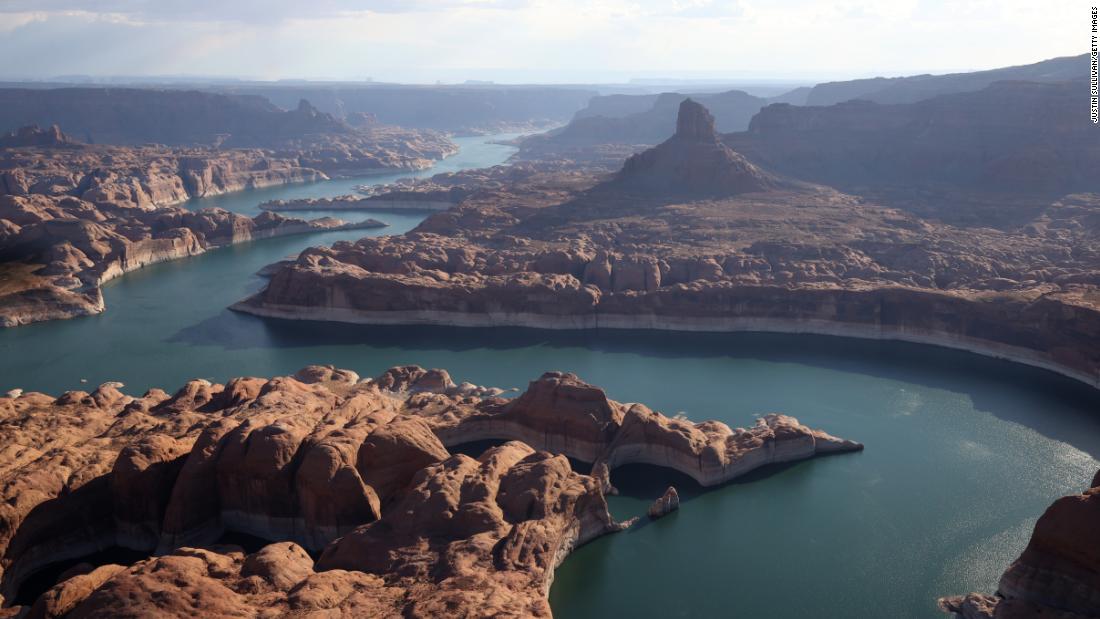
Not only is Lake Powell's water level plummeting because of drought, its total capacity is shrinking, too

Introduction & Background
Lake Powell, a vast and picturesque reservoir situated on the border of Arizona and Utah, has been facing an unprecedented water crisis. The drought-stricken region's water level has been plummeting at an alarming rate, leaving the global community concerned about the consequences of this crisis. However, this is not the only concern; the sheer capacity of Lake Powell is also dwindling, further exacerbating the water scarcity in the region. As we delve into the details of this crisis, it becomes crystal clear that Lake Powell's water level and capacity problems are not isolated events but rather symptoms of a broader, more complex issue.
The current water crisis at Lake Powell has left residents, tourists, and environmentalists alike grappling for solutions. While the drought has contributed to the decrease in water level, a more pressing concern is the structural integrity of the dam itself. As the water level drops, the risk of dam breaches and catastrophic failures increases, putting countless lives and properties at risk. In light of this, the Bureau of Reclamation (BOR) has been conducting regular surveillance and monitoring the water level to mitigate the adverse effects of the drought.
Moreover, Lake Powell's declining water capacity has already caused the Lake Mead National Recreation Area to experience some operational restrictions. The drought-impacted water supply has resulted in decreased river flows, making it challenging to maintain the normal recreational activities, including water sports and boating. These restrictions are likely to continue unless effective measures are taken to manage the water resources and mitigate the effects of drought.
Furthermore, the economic implications of Lake Powell's water crisis cannot be overstated. The drought and declining water capacity have not only affected the local tourist industry but have also had far-reaching consequences for the regional economy. As one of the largest recreational reservoirs in the United States, Lake Powell attracts millions of visitors each year. The loss of these recreational opportunities and the decline in water-based tourism are likely to have a devastating impact on local businesses, putting the livelihoods of countless families at risk.
Deep Global Analysis
From a global perspective, Lake Powell's water crisis serves as a stark reminder of the complex relationships between climate, ecosystems, and human societies. As the world struggles to come to terms with the impacts of climate change, the decline of glaciers, and desertification, it is becoming increasingly apparent that water scarcity is a pressing global issue. As Lake Powell's water level continues to plummet, it is imperative for international stakeholders to develop new strategies and partnerships to mitigate the adverse effects of this crisis.
In the context of global water management, Lake Powell's crisis highlights the urgent need for collaborative efforts to address the interconnected problems of drought, climate change, and water scarcity. With the global population projected to reach 9.7 billion by 2050, the World Economic Forum estimates that over 700 million people are currently living in water-scarce countries, with another 2 billion at risk of being displaced due to water scarcity by 2050. As a result, it becomes imperative for policymakers, scientists, and stakeholders to work together to develop effective policies and technologies to address these emerging water security challenges.
Furthermore, the Lake Powell crisis emphasizes the importance of preserving and maintaining the natural water cycles in our ecosystems. Over the past few decades, anthropogenic activities such as deforestation, soil salinization, and the diversion of natural water flows have led to increased water scarcity, exacerbated by climate change. Therefore, it is imperative to adopt policies that protect, restore, and rehabilitate water-cycling pathways and preserve the natural water flows in our ecosystems.
Moreover, the economic and social impacts of Lake Powell's water crisis offer valuable insights into the global economy's vulnerabilities to environmental crises. As droughts and water scarcity begin to have far-reaching consequences for local, regional, and global economies, policymakers and stakeholders must start developing new metrics for measuring water's economic value. This involves integrating water into the national accounts, conducting comprehensive water assessments, and adopting innovative technologies to predict and mitigate droughts, water scarcity, and climate change.
Additionally, Lake Powell's water crisis serves as a poignant reminder of the disproportionate impacts of climate change on vulnerable populations, particularly in the Global South. The World Health Organization estimates that by 2025, half of the global population will live in water-stressed areas, with low-income communities disproportionately affected by climate change. As policymakers and stakeholders navigate the complexities of addressing climate change, it is essential to prioritize inclusive and equitable water management policies that address the needs of vulnerable populations worldwide.


Expert Verdict & Future Projections
In the absence of concerted action, the future projections for Lake Powell's water crisis suggest a grim scenario. As the drought continues to grip the region, the water level will likely plummet further, threatening the structural integrity of the dam and putting lives at risk. Moreover, the economic impacts of the crisis will likely escalate, causing irreparable harm to local businesses, communities, and the regional economy.
Therefore, experts and policymakers must come together to develop a comprehensive plan to mitigate the effects of this crisis. This plan should involve innovative technologies for water conservation, efficient water use, and recycling, as well as collaborative efforts to address the root causes of the drought and water scarcity. Furthermore, a concerted international effort is necessary to develop new global governance frameworks that prioritize water security, climate change mitigation, and human development.
In the long term, experts predict that the future of Lake Powell will depend on a multifaceted approach that involves both immediate measures and long-term strategies. On the one hand, this will necessitate the development and deployment of innovative water management technologies, including advanced desalination, water recycling, and conservation systems. On the other hand, this will also require concerted efforts to address the root causes of water scarcity, climate change, and drought, including deforestation, soil salinization, and diversion of natural water flows.
⚖️ Credits, DMCA & Fair Use Notice
- Primary Source Concept: cnn.com (Used strictly for reporting inspiration).
- Visual Media: Generated via AI & referenced from cnn.com.
- Authorship: The textual content is 100% uniquely drafted by PixelRadar AI Analytics and human experts.
Fair Use Policy: This article contains uniquely generated analysis for educational, forecasting, and news reporting purposes under the Fair Use doctrine. No copyright infringement is intended. If you are the rightful owner of any visual or conceptual material and wish for it to be credited differently or removed, please contact us. We will honor take-down requests within 24-48 hours.
📥 Join For Free Content & Communities
🚀 Join The Nextgen 🎮 Join BM Bromania ⚡ Join MR Jaguar 🔥 Join MRx Channel#GlobalBreakingNews #GlobalNews #WorldUpdates #Trending #GlobalNews #MarketUpdate