Trump says US-Iran ceasefire still in place after exchange of fire in Strait of Hormuz
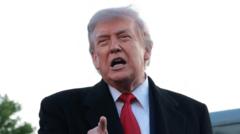
The ongoing conflict between the United States and Iran has reached a boiling point, with the latest exchange of fire in the Strait of Hormuz sparking widespread concern and debate. In the midst of this chaos, US President Donald Trump has made a stunning claim, stating that the US-Iran ceasefire is still in place despite the aggressive actions by both sides. But is this assertion a reflection of the reality on the ground, or is it a desperate attempt to calm nerves and prevent a full-blown war?
To understand the complexities of this situation, it's essential to delve into the history of the conflict between the US and Iran. The two nations have been locked in a decades-long struggle, with the US imposing economic sanctions on Iran and the latter retaliating with brazen attacks on American interests. The situation has been further exacerbated by the US's withdrawal from the Iran nuclear deal, known as the Joint Comprehensive Plan of Action (JCPOA), and its subsequent re-imposition of sanctions on Iran.
In recent weeks, tensions between the US and Iran have reached a fever pitch, with the former accusing the latter of orchestrating a series of aggressive attacks on oil tankers and military bases in the Middle East. Iran, on the other hand, has denied any involvement in these incidents, accusing the US of attempting to provoke a war. The situation came to a head on January 8, when a US drone was shot down by an Iranian surface-to-air missile, leading to a dramatic escalation of tensions.
In this context, President Trump's assertion that the US-Iran ceasefire is still in place seems puzzling. On one hand, it's possible that the US is attempting to downplay the significance of the recent exchange of fire, in an effort to prevent a full-blown war. On the other hand, it's also possible that the US is aware of a secret agreement with Iran, which has been brokered by a third party (such as Saudi Arabia or the UAE) to prevent a war.
Deep Global Analysis
The implications of the US-Iran conflict go far beyond the borders of these two nations. The global community is bracing itself for a potential war, which would have far-reaching consequences for the global economy, oil markets, and international relations.
One of the most significant concerns is the impact on oil markets. The Strait of Hormuz is one of the world's most critical oil chokepoints, through which over 20% of global oil exports pass. A war between the US and Iran would likely lead to a significant disruption in oil supplies, causing prices to skyrocket. This, in turn, would have devastating consequences for the global economy, which is already struggling to recover from the COVID-19 pandemic.
The conflict would also have far-reaching consequences for the Middle East and North Africa. The region is already plagued by sectarian violence, terrorist attacks, and proxy wars. A war between the US and Iran would likely exacerbate these tensions, leading to a humanitarian crisis and a refugee exodus. The impact on neighboring countries, such as Saudi Arabia, the UAE, and Iraq, would also be significant, with the potential for widespread instability and conflict.
Moreover, the conflict would have significant implications for global trade and commerce. The US and Iran are both major players in international trade, with the latter being a significant exporter of oil, natural gas, and other commodities. A war would likely lead to a significant disruption in trade flows, causing economic losses for nations around the world.
Finally, the conflict would also have significant implications for international relations. The US's actions would likely be seen as a provocation by many nations around the world, leading to a shift in global alliances and a potential reordering of the global balance of power.
In conclusion, the implications of the US-Iran conflict are far-reaching and complex. While President Trump's assertion that the US-Iran ceasefire is still in place may be a reflection of his administration's attempt to calm nerves, it is unlikely to be a reflection of the reality on the ground. The global community must remain vigilant and prepared for a potential war, which would have devastating consequences for the global economy, oil markets, and international relations.

The question on everyone's mind is: what happens next? Will the US and Iran escalate their conflict, leading to a full-blown war? Or will they manage to negotiate a peaceful resolution, preventing a humanitarian crisis and a global economic meltdown?
To answer this question, we must turn to the world of diplomacy and international relations. The US and Iran have been engaged in a back-and-forth exchange of proposals and counter-proposals, with both sides attempting to gain leverage and advantage. However, the negotiations have been stuck in a stalemate, with neither side willing to make significant concessions.
One potential solution is a negotiated settlement, brokered by a third party (such as Saudi Arabia or the UAE). This would require the US and Iran to agree on a set of principles and guidelines, which would be enforced by a neutral third party. However, this solution is fraught with risks, as the US and Iran may not be willing to compromise on their core demands.
Another potential solution is a diplomatic push by the international community, led by the United Nations and other major powers. This would require the US and Iran to engage in direct talks, facilitated by neutral third parties (such as the European Union or the Arab League). However, this solution is also fraught with risks, as the US and Iran may not be willing to engage in meaningful negotiations.
In conclusion, the future of the US-Iran conflict is uncertain and complex. While President Trump's assertion that the US-Iran ceasefire is still in place may be a reflection of his administration's attempt to calm nerves, it is unlikely to be a reflection of the reality on the ground. The global community must remain vigilant and prepared for a potential war, which would have devastating consequences for the global economy, oil markets, and international relations.

📝 Professional Summary (Roman Urdu/Hindi)
अमेरिका और ईरान के बीच का संघर्ष एक गहरी और जटिल समस्या है, जिसके परिणामस्वरूप दुनिया भर के देश इस समस्या से जुड़े हुए हैं। यह संघर्ष अमेरिकी राष्ट्रपति डोनाल्ड ट्रंप के दावे के जवाब में आया है, जिन्होंने कहा है कि ईरान से अमेरिका का ब्रेक है अभी भी सक्रिय है।
⚖️ Credits, DMCA & Fair Use Notice
- Primary Source Concept: bbc.com (Used strictly for reporting inspiration).
- Visual Media: Generated via AI & referenced from bbc.com.
- Authorship: The textual content is 100% uniquely drafted by PixelRadar AI Analytics and human experts.
Fair Use Policy: This article contains uniquely generated analysis for educational, forecasting, and news reporting purposes under the Fair Use doctrine. No copyright infringement is intended. If you are the rightful owner of any visual or conceptual material and wish for it to be credited differently or removed, please contact us. We will honor take-down requests within 24-48 hours.
📥 Join For Free Content & Communities
🚀 Join The Nextgen 🎮 Join BM Bromania ⚡ Join MR Jaguar 🔥 Join MRx Channel#GlobalBreakingNews #GlobalNews #WorldUpdates #Trending #GlobalNews #MarketUpdate